
Buildrager
Constantin Meunier
1898

Details
- Collection: Antwerp, Living and working, The collection
- Material: bronze, blue stone
- Acquisition method: commision
- Object number: KIS.0023
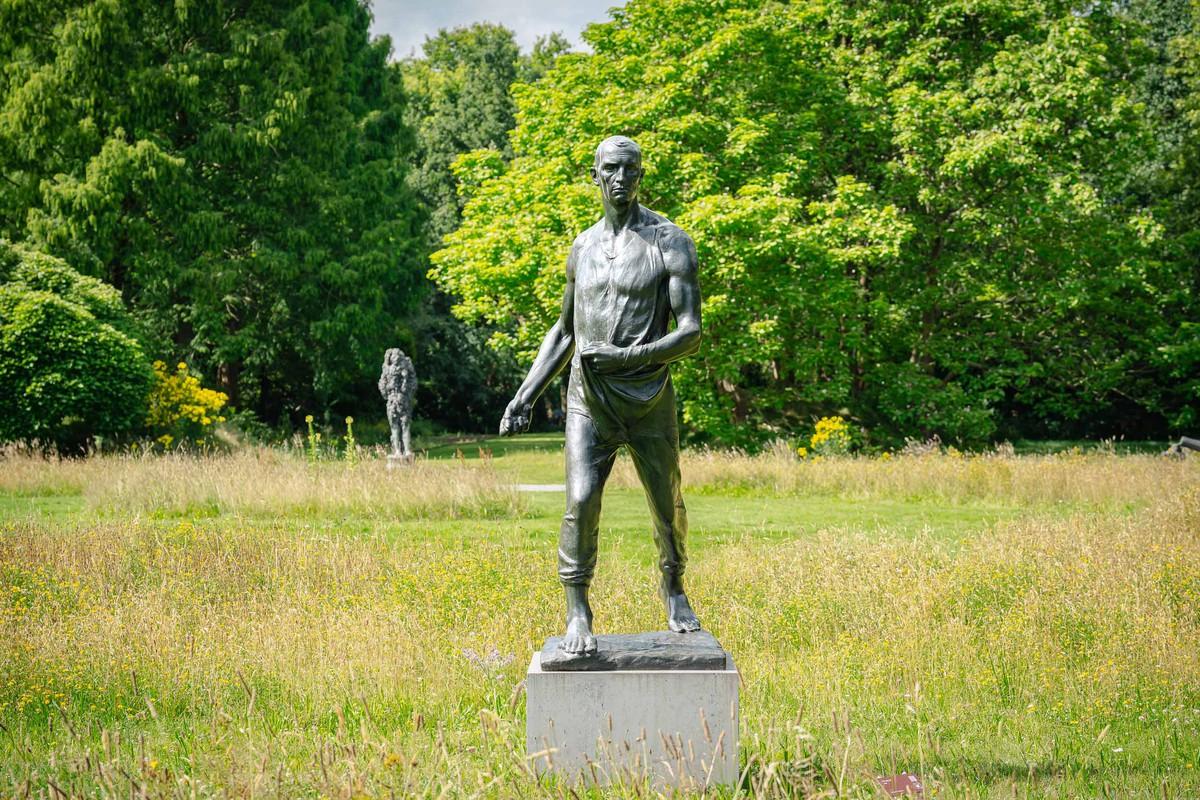
Buildrager (Longshoreman) is an idealized figure of a dock worker with a muscular body, dressed in tightly fitted dockworker’s clothing and wearing the specific head cover used for carrying sacks, popularly called builen. He adopts a confident, almost defiant stance with both hands on his hips. The strength and pride expressed by this statue introduced new qualities into the artistic representation of the working class.
The formal language of Longshoreman shows clear parallels with The Sower (1896), another sculpture by Meunier displayed at the Middelheim Museum. Both works glorify human labor.
Originally, Meunier’s dockworker was conceived as an individualized human figure, representing the growing consciousness of the working class. After World War II, the figure also came to symbolize regained freedom, in memory of the longshoremen who continued their work under the terror of the German V-bombs. To date, it has also been an important symbol for the port unions, who pay tribute each year with floral wreaths.
Constantin Meunier (1831–1905) began his career as a realist painter and later became one of the most renowned sculptors of the 19th century. His stay in the Trappist monastery of Westmalle led him to religious themes and a restrained visual language. From 1875 onward, he focused on the lives of workers and peasants, which he observed in the Antwerp docks and the coal mines of the Borinage – subjects that became central to his oeuvre.
From the same artist
Constantin Meunier
However perfect this depiction of a farmer may seem, the harsh reality of 19th-century peasant life was not so rosy. The realist artists were the first to portray “life as it is,” giving attention and dignity to workers and peasants. With his idealizing style, Constantin Meunier even endowed peasants, and later workers, with quasi-divine status.